
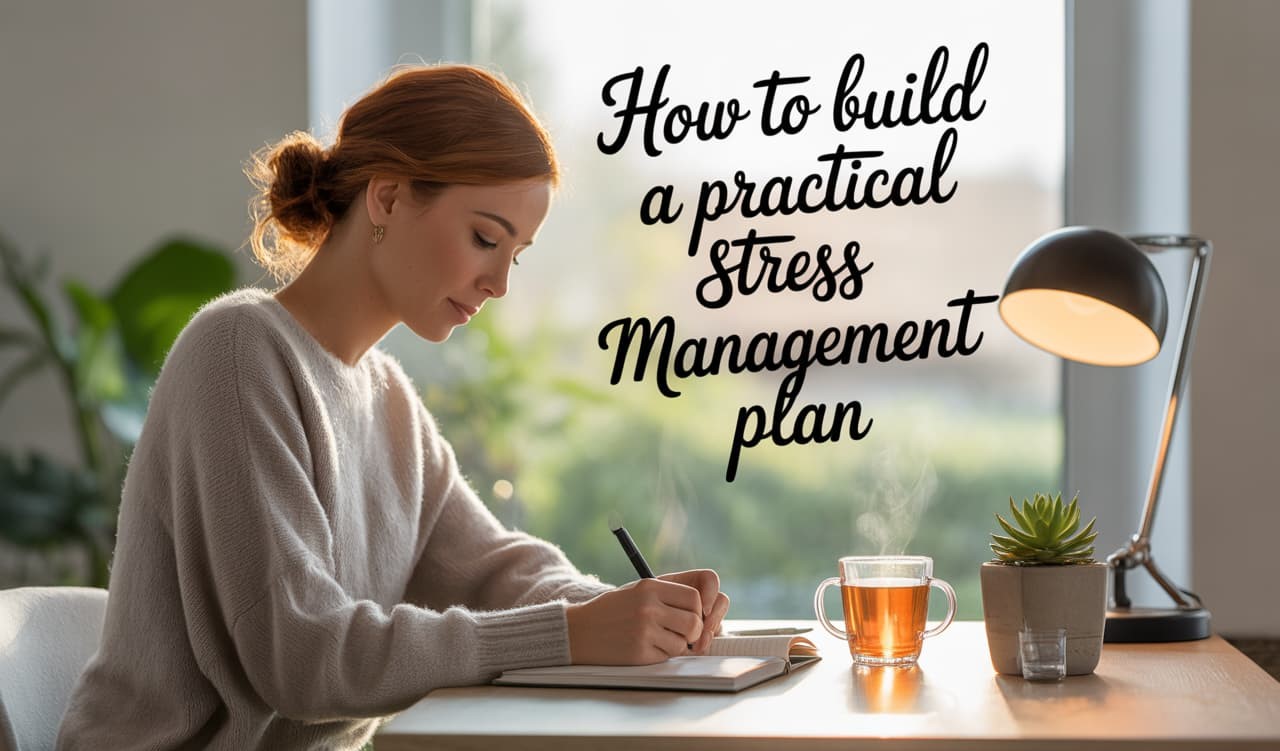
Stress is something a lot of people struggle with now and again. Unmanaged stress negatively impacts a person’s health, productivity, workplace efficiency, relationships, and mental wellness. Though stress is inevitable, it is possible to change one’s attitude towards stressful periods. This is why having a solid plan for stress management is essential.
Working with personal triggers and coping strategies, defining outcomes, and reasoning triggers are essential steps towards managing different types of stress. Having an effective plan in advance helps tackle challenges with precision and clarity. Such plans provide the ability to work towards goals instead of succumbing to feeling oppressed by external factors.
The modern world’s incessant movement, dealing with chronic family demands, enduring an unrelenting workload, poor long-term health, or mounting, gradual, unmanageable tasks all become less daunting when there’s a systematic plan in place.
Understanding the Nature of Stress
To manage stress effectively, one must first understand what it is. Stress is an emotional and physical reaction of the body to some form of threat or challenge. It involves an emotional component, most often the fight or flight response. Stress can arise physically, behaviorally, or emotionally.
On the other hand, moderate stress can improve energy levels and enhance cognitive function. Unlike moderated stress, chronic stress assumes there is an unremitting risk of danger, so the body is forced to adapt. Such adaptation is harmful in the long run, both mentally and physically.
Some symptoms of chronic stress include fatigue, sleeplessness, muscle tension, and difficulty concentrating. Heart disease, high blood pressure, anxiety, and even depression are serious diseases that can be contributed to by chronic stress.
Stress and strain both alter a person’s psychological and physiological parameters. Addressing both challenges hinges on first accepting that reality.
Why You Need A Stress Management Plan
Most people wait too long to deal with stress, dealing only with the stress itself after it has escalated to an overwhelming level. This second method is clearly short-sighted and wasteful. Having a stress management system in advance helps avoid preemptive damage control.
The order provides understatement, which brings essential context to overwhelming disorder. Rather than attempting to aid during the crisis moment, if order is anticipated and tailored to the person’s needs, values, habits, and routines, it is far more efficient.
Without a strategy, planning risks using surface-level relief techniques, such as avoidance, substance use, overeating, or even exercising, which tend to ease pressure in the short term, but add significant damage over time.
All of these bad behaviors are easily obtainable and replaceable with a good strategy to shape the development of new and sustainable healthy ones over time. The goal for the approach is not to relieve stress, but instead to strengthen one’s resilience so that when the time comes to bear heavy life-lifting tasks, there is a lesser chance of being reduced to rubble.
Building a Practical Stress Management Plan
Step One: Diagnose Your Major Sources of Stress
Before each person is able to formulate their own plan, they must first evaluate the sources of stress that already exist in their lives. You can take inventory of everything that adds stress to your life, for instance, a mini stress bubble.
Stressors can be external and manifest as challenges like workplace expectations, economic concerns, and interpersonal conflicts. Stressors can also originate internally, like perfectionism, self-doubt, or a negative self-image.
When does stress first hit you? Is it a busy schedule, feeling a loss of control, running late, or trying too hard to hit unrealistically high goals? It could be beneficial for you to track stressors in your journal or a note application. Document events and feelings along with your reactions to each event. Over time, patterns would stand out that you can identify. These patterns could help you build a foundation on which the rest of your plan can be customized and built.
Step Two: Identify Your Symptoms of Stress
Identify what symptoms of stress you have. Maybe experiencing a racing heartbeat, a tightened jaw, a low emotional response, or mild anger. The difference with being gentle with yourself, as opposed to ignoring your early symptoms, is action taken becomes easier to manage.
When stressed, answer the following. Physically, how do I feel? What thoughts pop up most? Am I engaging in behaviors like social withdrawal and increased reactivity, or worsening sleep?
These signs mean it’s time to take further action that is necessary in your stress management plan and helps you define an effective structure for what the goals and steps will be. Respective categorization enables testing toward alternative paths that could yield more effective results.
Step Three: Create Maintenance Strategies for Every Day
A good stress management strategy includes actions taken on a daily basis that help mitigate stress and, in turn, the average of stressors encountered is minimized. Such strategies do not attempt to solve crisis situations since their goal is the prevention of stress.
Maintaining proper nutrition, exercising, and getting quality sleep all contribute to mood and energy levels. Not being active is less of an issue if one is engaging in walking, stretching, gentle dance, or light calisthenics.
Equally important is attention spent on psychological wellness. Having a packed calendar can be grounded with meditation, deep breathing, mindfulness techniques, journaling, or other calming exercises. Breath focus for a few seconds is portable and can quickly shift the nervous system back from overreaction to baseline.
Social interaction also needs to be attended to. Attend to social needs. Offer help. Receive help. Engage in enjoyable activities. People who have strong social networks tend to experience feeling of less stress compared to people who are encouraged to spend time alone.
With daily practice, such activities will be helpful during the stress-balancing process. Offered practices give a range of increased flexibility and resilience through practices.

Step Four: Strategize an Emergency Action Response
Stressors can occur at any given time and very suddenly, no matter what methods are used on a day-to-day basis. For those unpredictable moments, having a tailored stimulus-response system could prove useful.
Begin by creating a list of strategies that work to calm you down rapidly. Breathing exercises, short walks, listening to soft music, and stepping away from possible reflection time are a few examples of these.
These strategies also need to address stabilization or grounding techniques. These techniques help bring a person back to the present and out of spiraling thinking. Using senses to name five things to see, four, touch, three, hear, two, smell, and one, describe creates a state of calm.
You can also set up a calming space at home or at work, in a corner with a comfortable armchair, dim lighting, and soft corners twinkling with fairy lights, or paintings that remind you to take a moment. During acute moments of stress, critical thinking skills are often put on hold. If there is something preset and a course of action pre-decided, there is less need to figure things out in real time.
Step Five: Cope Wisely
While coping strategies are important, managing stress in the long run also requires revisiting what is actually triggering the stress. This could be reframing boundaries that are set in the office or in close relationships.
It could be managing time better or curbing ambition to meet unattainable targets. Other times, it requires talking to someone, asking for help, or making massive changes.
It is true that not all forms of stress can be eliminated, but many can be dealt with more proactively. A solid strategy incorporates not only dealing with stress, but also preventing too much of it from accumulating. Deep reflections and strategizing are often required, but in the end, these approaches provide serene relief more than instant solutions.
Step Six: Establish Weekly Check-ins
Handling stress issues should not take over your life. You need to celebrate what brings you joy. Carefree bliss should be encouraged. Set and keep strict limits as to when and where recharging is allowed without prior burdens. Let gentle nurturing help guide how the day unfolds, and become a gentle caretaker.
Reserve time every couple of months to assess your arrangements. What is effective? What is not? Are there fresh new habits to be formed? Are there plans that no longer fit your lifestyle?
It is also a good time for self-reflection regarding your journey, as even the smallest progress enhances self-esteem and creates encouraging reinforcement to remain motivated and engaged towards the objectives. Instead, treat your plan as a living document that develops together with you and not as fixed rules that need to be followed.
When to Seek Professional Support
While a personal plan can help you stay on track, there comes a time when stress becomes too much to handle, and it’s essential to seek professional support. If you are dealing with chronic anxiety, panic attacks, burnout, or depressive symptoms, professional support becomes imperative.
A therapist, counselor, or coach can help you process and navigate your feelings, offering tailored support and unique perspectives. Therapy isn’t reserved for a crisis, maintenance is equally vital.
There’s no reason to wait until a breaking point to seek help. Most of the time, early intervention leads to impactful progress that is steady, meaningful, and faster. Seeking assistance is not a sign of weakness. In fact, it is one of the strongest things you can do for your mental and emotional well-being.
Integrating Your Plan into Everyday Life
Your stress management plan will be successful if it integrates well into your life. As with most things in life, starting small has a big impact. Rather than working out for an hour once a month, a daily short morning walk is far more beneficial. For your morning walks to maximize effectiveness, they should be done daily.
A little bit of intention on your part goes a long way. You can take intentional pauses around meetings, lunchtime, or even just before you sleep. If done properly, stress relief strategies do not require a large investment of time to be effective.
Another approach would be to incorporate work and family life elements into your plan. Start making your stress management plan a part of your culture instead of a private project by sharing it with colleagues and loved ones.
Embracing your plan will allow it to become a part of your identity. The more you integrate your plan into your identity, the easier it will be to seek it for support during tough times.

Conclusion
While stress may be a part of life, suffering from stress is not necessary. Personalized, personalized plans give you structure and provide the tools you need, allowing you to navigate life’s challenges with greater resilience and reduced burden.
Recognizing stress triggers, developing daily routines, structuring for peak performance, and fixing underlying issues form a mentally and physically healthy system over time. Every journey begins with a single step, and even the smallest consistent action is a step in the right direction. With a solid plan in place, you shift from reactive to proactive and cultivate true resilience. Stress and challenges are bound to come your way, but how you respond to them will make all the difference.


